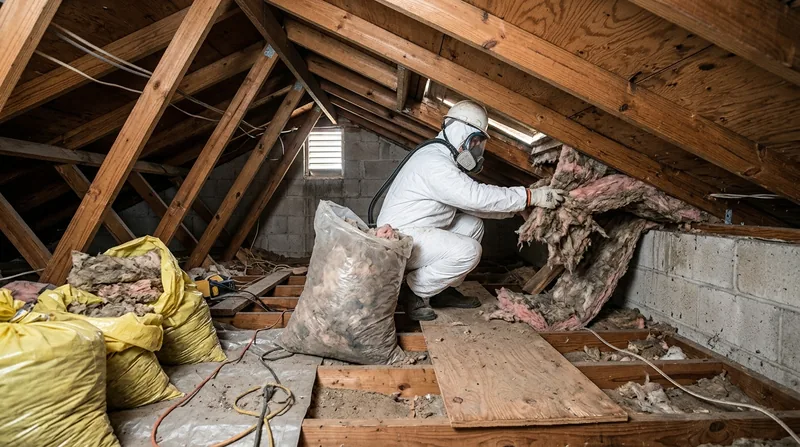




Jacksonville's housing stock spans from Riverside bungalows built over crawl spaces to mid-century concrete block homes with vented attics, and from newer slab-on-grade subdivisions to metal buildings and barndominiums across Clay and Nassau counties. In this hot, humid climate (IECC zone 2A), old insulation in attics and crawl spaces absorbs moisture from the long summer and hurricane season, and fiberglass batts or blown cellulose can fail fast when humidity and pests move in. Insulation removal in Jacksonville clears out wet, contaminated, or failed insulation before moisture spreads to the structure or new foam is installed. We remove old batts, blown insulation, and debris from attics and crawl spaces under homes in Riverside, Avondale, Arlington, Mandarin, and across Greater Jacksonville, so you can start fresh with a clean, dry substrate and the right insulation for your home. Getting the old material out safely and completely is the foundation of every retrofit, and it matters more in a climate where humidity and pests are constant threats.
Why Insulation Removal Matters in Jacksonville's Humid Climate
Jacksonville sits in a climate where vapor drive runs inward for most of the year, pulling humid air into attics and crawl spaces. Older homes in Riverside, Avondale, and Springfield often have original wall cavities and crawl spaces that were never designed to shed moisture, and fiberglass batts absorb water like a sponge. Once insulation gets wet, it loses its R-value, mold begins to grow, and rodents nest in the soggy material. Removing failed insulation before moisture spreads to the framing or rim joists is not a luxury, it is a necessity in this region.
- Wet or moldy insulation cannot be salvaged and must be removed before new foam can be installed safely.
- Rodent droppings and contamination in old insulation pose health risks and must be cleared away completely.
- Failed blown-in cellulose in attics settles and compacts over time, leaving gaps and exposing rim joists and band joists to air leaks.
- Removing old batts from crawl spaces under homes in Orange Park and Fleming Island opens access for air sealing and new closed cell foam that will actually stop moisture and pests.
Proper removal is the critical first step before attic spray foam insulation or any retrofit can proceed with confidence.
Key info: Jacksonville's humidity and summer heat make wet insulation a common problem in older homes. A crawl space under a Riverside bungalow or an attic in an Arlington mid-century home can trap moisture all summer, and fiberglass absorbs it. Removal clears the way for a dry, sealed installation that will actually hold up in this climate.
For detailed guidance on what the Florida building code requires for your specific address, check the City of Jacksonville Building and Zoning Department website or call your local building official.
How We Remove Insulation in Jacksonville Attics and Crawl Spaces
Insulation removal is straightforward work when done right: we clear out old batts or blown material, sweep and vacuum the substrate, and dispose of waste responsibly. The process depends on what is already there, how much space we have to work with, and whether the material is wet or contaminated. We always inspect for vermiculite (which may contain asbestos) and leave it alone for a licensed professional. Once the substrate is clean and dry, we can move forward with air sealing and new foam installation.
- We access the attic or crawl space and photograph the existing insulation to understand what we are removing.
- We remove all old batts, blown insulation, or debris using hand tools and a HEPA-filtered vacuum.
- We sweep and clean the substrate (joists, rim boards, or decking) so it is ready for new foam or air sealing work.
- We dispose of all waste in accordance with local regulations and haul it away.
- We provide a written estimate with photos before we start, so you know exactly what the job entails.
Every removal job in Jacksonville is followed by a site inspection to confirm the space is ready for crawl space spray foam insulation or other retrofit work.
Real example: A 1950s concrete block home in Jacksonville Beach had a vented attic with 4 inches of original fiberglass over the rim joists. After 60 years in a humid climate, the batts were sagging and matted, and the rim boards underneath showed mold. We removed all the old insulation, cleaned the framing, and installed closed cell foam to seal and protect the rim joists. Total removal took one day, and the homeowner could see the clean substrate and the mold was gone.
Insulation Removal Methods: Attics, Crawl Spaces, and More
The method we use depends on the type of insulation, the size of the space, and whether we are working in an attic, crawl space, or wall cavity. Most Jacksonville homes have either fiberglass batts or blown cellulose, but some older properties have loose-fill mineral wool or even vermiculite. We tailor our approach to the job and always prioritize safety and cleanliness.
| Approach | Description | Best for |
|---|---|---|
| Hand removal and bagging | We pull batts or loose insulation by hand, fold and bag it, and carry it out. | Fiberglass batts in attics, small crawl spaces, or areas with limited access. |
| Vacuum extraction | We use a HEPA-filtered vacuum system to suction blown cellulose or mineral wool out of cavities. | Blown-in cellulose in attics, settled or compacted insulation, large open areas. |
| Wet or contaminated material removal | We remove waterlogged insulation with extra care, bag it separately, and dispose of it responsibly; visible mold is left to a mold remediation specialist. | Crawl spaces with moisture, attics after roof leaks, homes in Orange Park or Mandarin with humidity damage. |
| Debris and substrate cleaning | After removal, we sweep, vacuum, and inspect framing for mold or pest damage. | All removal jobs, to prepare the space for new foam or air sealing. |
Insulation Removal Cost in Jacksonville: What to Expect
The cost of insulation removal in Jacksonville depends on how much material is in the space, whether it is wet or contaminated, and how easy it is to access. A straightforward attic removal of fiberglass batts might run from $950 to $1,500, while a larger crawl space with blown cellulose or a home with multiple zones could be higher. Wet or moldy insulation takes longer to remove safely and costs more. The best way to know what your job will cost is to get a free written estimate from us, with photos and a breakdown of what we will do and haul away.
- Size of the space (attic square footage, crawl space dimensions) is the biggest factor in removal cost.
- Type of insulation (batts, blown cellulose, mineral wool, or mixed material) affects how fast we can work.
- Condition (dry, wet, moldy, or contaminated with rodent droppings) changes the removal method and time.
- Access (stairs, hatches, or tight crawl spaces) in homes across Riverside, Arlington, or Mandarin can slow the job.
- Disposal and hauling are included in our estimate, so there are no surprise fees when the job is done.
We offer a free estimate within 24 hours. Call us at (904) 816-3633 or visit our pricing page to see typical ranges for your area.
Insulation Removal Near Me: What Jacksonville Homeowners Should Know When Hiring
When you are looking for an insulation removal contractor near Jacksonville, there are a few things to verify before you sign a contract. First, make sure the contractor is fully insured and can provide a certificate of insurance on request. Second, get at least two or three written estimates with photos and a clear scope of work, not just a phone quote. Third, ask to speak with past customers or see references from homes in your neighborhood. Finally, understand what permits (if any) apply to your address by checking with your local building department, and do not hire a contractor who promises to skip permitting or who cannot explain what applies at your house.
- Verify that the contractor is fully insured with a current certificate of liability coverage.
- Ask for a written estimate with photos of the existing insulation and a line-by-line breakdown of the work.
- Request references from recent jobs in Jacksonville, Orange Park, or your specific neighborhood.
- Check the contractor's online reviews and ask how long they have been in business (we have been serving Jacksonville since 2011).
- Confirm that the contractor can explain what permits or inspections apply at your address and will work with the local building department.
- Do not hire based on price alone, especially if the estimate is far below market or includes no detail about what is being removed or hauled away.
Once your insulation is removed and the space is clean and dry, you are ready to move forward with spray foam insulation or air sealing. Get your free estimate today by calling (904) 816-3633 or visiting our contact page.
Insulation Removal in Jacksonville: Pricing Guide
| Service | Price | Details |
|---|---|---|
| Attic insulation removal (fiberglass batts) | Starting at $950 | Hand removal and bagging of batts from typical 1,000 to 1,500 sq ft attic, includes cleanup and haul away. |
| Crawl space insulation removal | Starting at $1,200 | Blown cellulose or batts from crawl space, vacuum extraction, substrate cleaning, and disposal included. |
| Wet or contaminated material removal | Starting at $1,500 | Moldy, waterlogged, or rodent-affected insulation requires extra care, specialized bagging, and responsible disposal. |
| Large or complex removal (multiple zones, mixed materials) | On estimate | Homes with large attics, multiple crawl spaces, or mixed insulation types need an on-site inspection for accurate pricing. |
| Travel and access | Included | No separate mileage or access fees within Jacksonville and surrounding service areas, all included in the quote. |
| Free written estimate | Free | Detailed estimate with photos and scope of work, response within 24 hours at (904) 816-3633, no obligation to book. |
Indicative pricing, the exact cost depends on square footage, finish, and site access. Free personalized estimate within 24h at (904) 816-3633.


