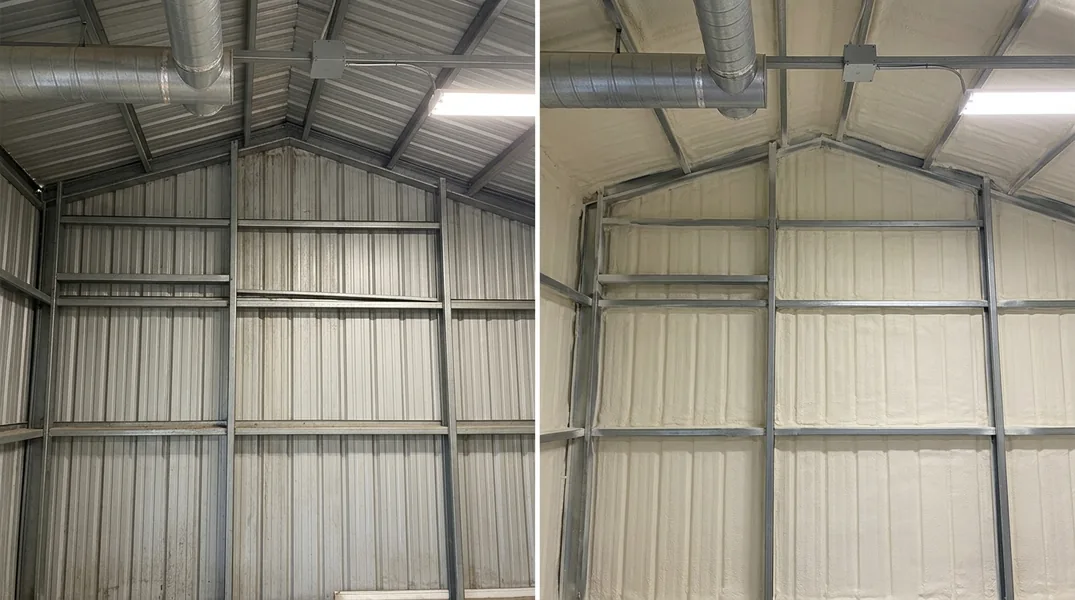
Why Arlington's Block Homes Get So Hot
If you own a block home in Arlington, you've probably noticed that your attic becomes a furnace during Jacksonville's long, humid summers. Block construction is popular in Northeast Florida because it's durable and affordable, but it comes with a thermal challenge: concrete blocks conduct heat rapidly, and that heat transfers directly into your attic space. Once the sun beats down on your roof, the temperature in an uninsulated or poorly insulated attic can exceed 150 degrees Fahrenheit.
This extreme heat doesn't just make your home uncomfortable. It forces your air conditioning system to work overtime, driving up energy bills and shortening the lifespan of your HVAC equipment. The problem becomes even more severe in block homes because the thermal mass of the walls amplifies heat absorption. Many homeowners in Arlington assume they need to replace their AC unit, when the real issue is inadequate attic insulation. That's where choosing the right insulation product becomes critical to your comfort and wallet.
Spray Foam vs. Blown-In Insulation: The Core Differences
When you start researching attic insulation solutions, you'll quickly encounter two main categories: spray foam and blown-in insulation. These products work in fundamentally different ways, and understanding those differences helps you make an informed decision for your Arlington home. Blown-in insulation, typically made from fiberglass, cellulose, or mineral wool, is installed by blowing loose fibers into your attic cavity. Spray foam, by contrast, is applied as a liquid that expands and hardens, creating a seamless, air-tight barrier.
The performance gap between these two approaches is significant. Attic Spray Foam Insulation creates an air seal that blown-in products simply cannot match. When you apply spray foam to your attic, it fills every gap, crack, and void. It adheres to rafters, joists, pipes, and wiring, eliminating the air leakage that makes blown-in insulation less effective. Blown-in insulation, while less expensive upfront, settles over time and leaves gaps around obstacles, allowing conditioned air to escape and hot air to infiltrate.
Spray Foam vs. Fiberglass: Which Performs Better in Florida Heat
Fiberglass has been the standard attic insulation in American homes for decades, and for good reason: it's affordable and relatively easy to install. However, fiberglass has significant limitations in hot, humid climates like Jacksonville. Fiberglass is hygroscopic, meaning it absorbs moisture from the air. In Florida's subtropical climate, where humidity levels regularly exceed 70 percent, fiberglass batts and blown-in fiberglass absorb that moisture, which reduces their R-value and can promote mold growth inside your attic.
Spray foam, particularly Closed Cell Spray Foam Insulation, is hydrophobic. It repels moisture rather than absorbing it, making it ideal for Florida homes. Closed cell foam has an R-value of approximately 6.0 to 7.0 per inch, compared to fiberglass's 3.2 to 3.8 per inch. This means you need less thickness of spray foam to achieve the same thermal resistance. Additionally, the air-sealing properties of spray foam prevent humidity-laden outdoor air from entering your attic in the first place, which is a major advantage in Jacksonville's climate.
Spray Foam vs. Cellulose: Moisture, Settling, and Long-Term Performance
Cellulose insulation is made from recycled paper and is often marketed as an eco-friendly alternative to fiberglass. Like fiberglass, cellulose is blown into your attic as loose fill. While cellulose has a slightly higher R-value per inch than fiberglass (around 3.6 compared to 3.2), it shares the same fundamental weakness: it absorbs moisture. In a humid climate, cellulose can become waterlogged, losing its insulating properties and creating conditions for mold and rot.
Another critical issue with cellulose is settling. Over time, cellulose compacts under its own weight, reducing its thickness and R-value. Studies show that cellulose can settle by 10 to 20 percent over the life of the product. Spray foam, by contrast, does not settle. Once it cures, it maintains its full R-value indefinitely. For homeowners in Arlington and throughout Jacksonville, this means spray foam delivers consistent performance year after year, while cellulose requires periodic top-ups to maintain effectiveness.
Best Insulation for Attic in Jacksonville: Why Spray Foam Wins
When you compare all the options, spray foam emerges as the best insulation for attic applications in Jacksonville. The combination of superior R-value, moisture resistance, air-sealing capability, and durability makes spray foam the clear winner for block homes in hot, humid climates. Open Cell Spray Foam Insulation is slightly less expensive than closed cell and offers an R-value of around 3.6 per inch, making it a good middle-ground option. Closed cell foam provides even better performance and is worth the extra investment if your budget allows.
The energy savings alone justify the higher upfront cost of spray foam. Homeowners who switch from blown-in insulation or fiberglass to spray foam typically see reductions in cooling costs of 15 to 30 percent, depending on their previous insulation condition. In Jacksonville's climate, where air conditioning runs eight months out of the year, those savings accumulate quickly. Beyond energy efficiency, spray foam protects your attic from moisture damage, prevents pest infiltration, and improves indoor air quality by creating a tighter thermal envelope.
Attic Spray Foam Insulation Cost in Jacksonville: What to Budget
The pricing for spray foam insulation depends on several factors: the size of your attic, the R-value you're targeting, whether you choose open or closed cell foam, and the current condition of your attic space. On average, homeowners in Jacksonville can expect to pay between $1.50 and $3.50 per board foot for spray foam installation, with closed cell foam at the higher end of that range. For a typical 1,500-square-foot attic, a complete spray foam installation might range from $3,000 to $7,000.
While this seems expensive compared to blown-in insulation (which might cost $800 to $2,000 for the same space), remember that you're investing in a product that won't settle, won't absorb moisture, and will deliver superior energy savings for decades. Many homeowners finance the project through energy-efficient home improvement loans or take advantage of federal tax credits for energy-efficient upgrades. Jacksonville Spray Foam Insulation can discuss your options and help you understand the long-term return on investment. Contact us at (904) 816-3633 or request a free estimate to get an accurate quote for your home.
Looking for a professional spray foam insulation contractor in Jacksonville? Jacksonville Spray Foam Insulation responds fast for all your spray foam insulation needs.
Get a Free Quote