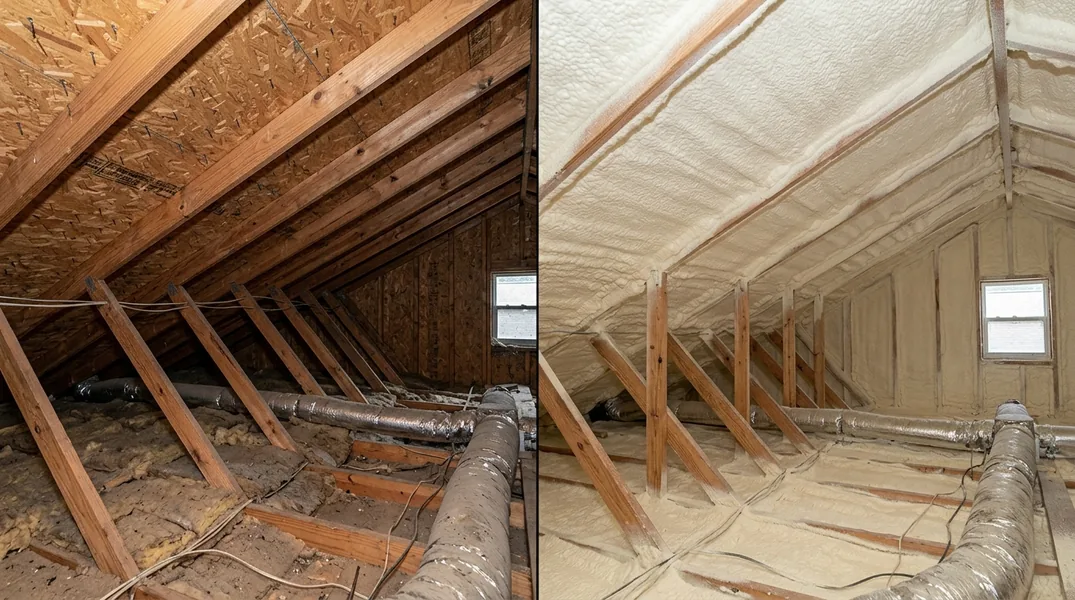
Understanding Spray Foam Insulation Types
When you're considering Attic Spray Foam Insulation for your home in Jacksonville, you'll quickly encounter two primary options: open cell and closed cell spray foam. While both are applied using similar equipment and create an air seal within your attic, they differ significantly in density, performance characteristics, and cost. Understanding these differences is essential for making an informed decision that aligns with your home's specific needs and your budget.
Open cell spray foam has a lower density, typically around 0.5 pounds per cubic foot, and features a structure where the cells are not completely enclosed. This allows air and moisture to pass through the material more readily. Closed cell spray foam, by contrast, is much denser at approximately 1.5 to 2 pounds per cubic foot, with cells that are completely sealed. This fundamental structural difference cascades into various performance benefits and trade-offs that matter for Jacksonville homeowners dealing with Florida's humid subtropical climate.
Open Cell Spray Foam: Lightweight and Budget-Friendly
Open Cell Spray Foam Insulation is an excellent choice for homeowners prioritizing cost-effectiveness without sacrificing basic insulation performance. Because it's less dense and requires less material per square foot, open cell foam typically costs less to install than its closed cell counterpart. For many Jacksonville homeowners working within a tight budget, this lower initial investment makes open cell foam an attractive entry point into spray foam insulation technology.
The lightweight nature of open cell foam also makes it easier to install in existing attics where structural concerns might be a factor. The material expands significantly during application, filling gaps and cavities thoroughly, and its acoustic properties are superior to closed cell foam, making it an excellent choice if sound dampening is a concern. However, open cell foam's permeability means it allows moisture vapor to pass through, which in Florida's humid environment requires proper ventilation considerations. The R-value per inch is typically lower than closed cell foam, usually around R-3.6 to R-3.8 per inch, so you may need a thicker application to achieve your target insulation value.
Closed Cell Spray Foam: Maximum Protection and Durability
Closed Cell Spray Foam Insulation represents the premium option for homeowners seeking maximum insulation performance and moisture protection. Its higher density and sealed cell structure create a vapor barrier, making it ideal for humid climates like Jacksonville where moisture intrusion can lead to mold, wood rot, and structural damage. This vapor barrier characteristic means you can create what's known as a sealed attic insulation system, which is particularly valuable in Florida's climate.
The superior R-value of closed cell foam, typically ranging from R-6 to R-7 per inch, means you achieve better insulation with less material thickness. This higher efficiency translates to greater energy savings over time, which can offset the higher upfront pricing. Additionally, closed cell foam adds structural rigidity to your attic, which can strengthen roof decking and provide additional wind resistance, an important consideration given Florida's hurricane season. The material also acts as an air seal and moisture barrier simultaneously, creating an unvented attic spray foam environment that protects your home from external elements.
Moisture Control and Florida's Humid Climate
Jacksonville's subtropical climate presents unique challenges for attic insulation, with high humidity levels and frequent moisture exposure throughout the year. Open cell spray foam, being permeable, allows moisture vapor to migrate through it, which means your attic must be properly ventilated to prevent moisture accumulation. In some cases, this can be an advantage if you prefer a vented attic system, but it requires careful design to ensure moisture doesn't create problems elsewhere in your home.
Closed cell spray foam's vapor-impermeable nature makes it the preferred choice for creating a truly sealed attic environment that resists Florida's moisture challenges. When properly installed as an unvented attic spray foam system, closed cell foam prevents warm, humid air from infiltrating your attic space, eliminating the conditions that foster mold growth and wood deterioration. This is particularly important for Jacksonville homeowners because the combination of heat, humidity, and wood creates an ideal environment for moisture-related damage. The sealed attic approach also means your air conditioning system doesn't have to work as hard to condition attic spaces, leading to measurable energy bill reductions.
Attic Spray Foam Insulation Cost in Jacksonville: What to Budget
Budget is understandably a major factor in choosing between open cell and closed cell spray foam. Open cell spray foam typically costs between $0.50 and $1.00 per board foot, while closed cell spray foam ranges from $1.00 to $2.00 or more per board foot. For a typical 1,500 square foot attic space, you might expect open cell installation to cost $2,500 to $5,000, whereas closed cell could run $5,000 to $10,000 or higher. These figures vary based on attic accessibility, existing insulation removal requirements, and local market conditions in Jacksonville.
While the higher cost of closed cell foam is significant, many homeowners find the investment justified by long-term energy savings and the superior protection it offers in Florida's climate. An energy audit can help you understand your specific situation and determine whether the premium for closed cell foam makes financial sense for your home. Jacksonville Spray Foam Insulation can provide a detailed free estimate that breaks down material and labor costs, helping you make a decision that aligns with both your immediate budget and long-term financial goals. Many homeowners also find that the improved comfort, reduced energy bills, and protection against moisture damage make closed cell foam the better value over the 20 to 30 year lifespan of the insulation.
Choosing the Right Spray Foam for Your Jacksonville Home
The choice between open cell and closed cell spray foam ultimately depends on your priorities, budget, and your home's specific characteristics. If you're primarily concerned with insulation value and cost, and your attic can accommodate proper ventilation, open cell foam may be sufficient. However, if you want maximum energy efficiency, superior moisture protection, and the peace of mind that comes with a truly sealed attic in Florida's humid environment, closed cell foam is the superior choice.
Jacksonville Spray Foam Insulation specializes in both types of spray foam installation and can assess your attic to recommend the best solution for your situation. Our team understands Jacksonville's climate challenges and can explain how each foam type will perform in your specific home. Whether you're dealing with an older attic that needs significant insulation improvement or you're building new construction, we have the expertise to guide you through the decision-making process. Contact us today at (904) 816-3633 or request a free estimate to learn which spray foam insulation option is right for you.
Looking for a professional spray foam insulation contractor in Jacksonville? Jacksonville Spray Foam Insulation responds fast for all your spray foam insulation needs.
Get a Free Quote