Open Cell vs Closed Cell Spray Foam: Understanding the Basics
When you're planning a spray foam insulation project in Duval County, one of the most important decisions you'll make is choosing between open cell and closed cell spray foam. These two types of insulation have fundamentally different structures, performance characteristics, and applications, and understanding the differences will help you make the right choice for your home.
Open Cell Spray Foam Insulation has a structure where the cells are not completely closed off from one another. This creates a softer, more flexible material that allows air and moisture to pass through. Think of it like a sponge with interconnected pores. In contrast, Closed Cell Spray Foam Insulation has cells that are tightly sealed, creating a dense, rigid barrier that blocks both air and moisture completely. This structural difference is the foundation for all the performance variations you'll encounter when comparing these two options.
Closed Cell Spray Foam R Value: Why Density Matters
The closed cell spray foam R value is one of the most compelling reasons homeowners choose this type of insulation. Closed cell foam typically achieves an R-value of 6.0 to 7.0 per inch, which is significantly higher than its open cell counterpart. This superior insulating power comes from the dense, tightly packed cell structure that resists heat transfer far more effectively. For homeowners in Jacksonville who want maximum thermal performance in a minimal space, this higher R-value per inch is a major advantage.
The high R-value of closed cell foam also means you need less material to achieve your target insulation level. This can be particularly valuable in attics where space is limited or where you're retrofitting existing structures. Additionally, the superior air sealing properties of closed cell foam create an extremely effective vapor barrier, which is especially important in Florida's humid climate. The closed cell structure prevents moisture from penetrating the insulation, protecting your home's structural integrity and preventing mold growth that thrives in our warm, wet environment.
Open Cell Spray Foam Benefits and Applications
Open Cell Spray Foam Insulation offers distinct advantages that make it an excellent choice for many applications, even though its R-value is lower. Open cell foam typically provides an R-value of 3.5 to 4.5 per inch, but this lower density means it's more affordable and easier to work with in many situations. The open cell structure allows the material to be more flexible and conformable, making it ideal for irregular spaces, around obstacles, and in areas where a rigid material might not fit properly.
One of the biggest benefits of open cell foam is its cost effectiveness. Because it requires less material and is simpler to install, open cell spray foam projects generally come with lower material and labor costs compared to closed cell applications. Additionally, open cell foam is an excellent acoustic insulator, making it a smart choice if you're concerned about noise transmission between rooms or from outside. The breathable nature of open cell foam also means it allows moisture to escape, which some homeowners prefer for interior walls where moisture management is a consideration. For many homeowners in Jacksonville seeking a balance between performance and budget, open cell foam represents a practical middle ground.
Spray Foam R Value Comparison: Making the Right Choice for Your Home
Understanding spray foam R value differences is crucial for determining which insulation type will best serve your needs. The gap between open cell (3.5 to 4.5 per inch) and closed cell (6.0 to 7.0 per inch) R-values is substantial, and this translates directly into real-world performance differences. If you're insulating an attic in Duval County, closed cell foam's higher R-value means you'll achieve better temperature control and lower energy bills. However, if you're working with budget constraints or insulating interior walls, open cell foam's lower cost per square foot might make more financial sense, even if you need slightly more material to reach equivalent R-values.
The climate in Jacksonville is another critical factor in your decision. Our hot, humid subtropical climate means that moisture management and vapor barriers are essential. Closed cell foam's superior moisture resistance makes it exceptionally well-suited to our environment, particularly in attics where heat and humidity can cause significant damage over time. Open cell foam can work in interior applications, but for attic spray foam insulation projects, closed cell typically offers better long-term protection and energy efficiency. The higher upfront cost of closed cell often pays for itself through reduced cooling costs and avoided moisture-related repairs.
Attic Spray Foam Insulation Near Me: When to Call a Professional
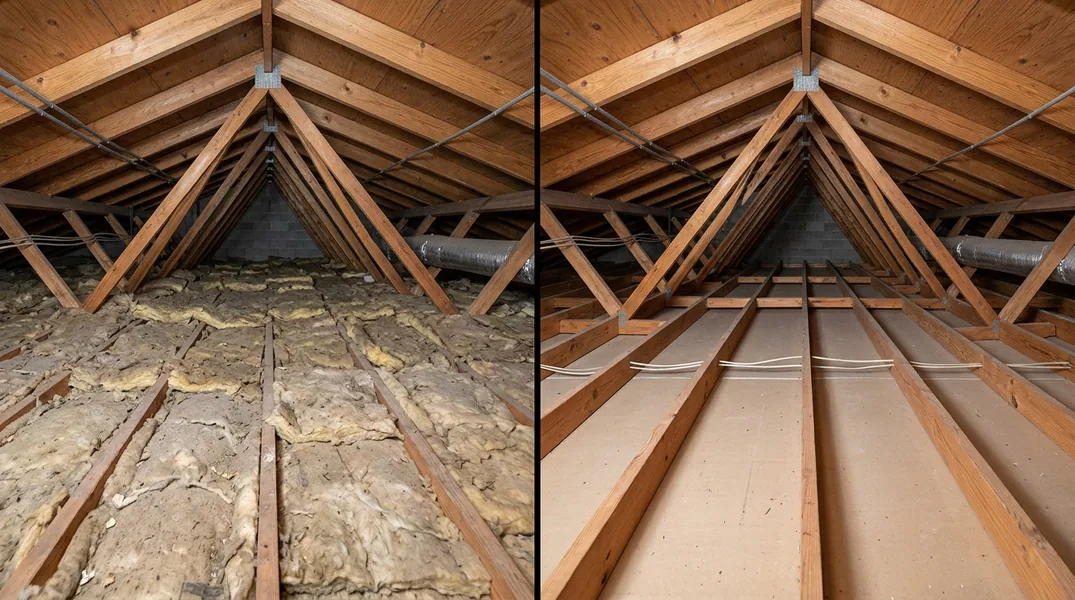
Attic Spray Foam Insulation is one of the most effective upgrades you can make to your home, but it's also a project that requires professional expertise. Your attic is particularly vulnerable to energy loss and moisture problems, and choosing the right foam type and installation method is critical. Professional installers understand the unique challenges of Duval County's climate and can recommend whether open cell or closed cell foam is best for your specific situation. They'll also ensure proper ventilation, air sealing, and coverage to maximize your insulation's effectiveness.
Attempting to install spray foam yourself is not recommended, as the application requires specialized equipment, training, and safety precautions. Professional spray foam contractors have the experience to properly assess your attic, identify air leaks and thermal weak points, and apply foam in a way that maximizes R-value and prevents common installation problems. If you're ready to upgrade your attic insulation, Jacksonville Spray Foam Insulation is here to help. Contact us at (904) 816-3633 or request a free estimate to discuss your project with our experienced team.
Spray Foam Insulation Cost in Jacksonville: What to Budget
Understanding the financial investment required for a spray foam project is essential for homeowners planning their insulation upgrade. The pricing for spray foam insulation varies based on several factors, including the type of foam you choose, the size of the area being insulated, and your specific project requirements. Closed cell foam typically costs more per square foot than open cell foam, but remember that you'll need less of it to achieve equivalent R-values due to its superior insulating properties. For many homeowners, the energy savings from closed cell foam's higher R-value offset the higher initial cost within a few years.
When budgeting for your project, consider not just the material cost but also the long-term benefits. Higher R-value insulation reduces your cooling costs year-round, which is especially significant in Florida's hot climate. Additionally, proper attic insulation prevents moisture-related damage that could cost thousands to repair. Jacksonville Spray Foam Insulation offers competitive pricing for both open cell and closed cell applications. To get an accurate estimate for your specific project, contact us at (904) 816-3633 or visit our website to request a free estimate from our team.
Looking for a professional spray foam insulation contractor in Jacksonville? Jacksonville Spray Foam Insulation responds fast for all your spray foam insulation needs.
Get a Free Quote