Understanding Jacksonville's Unique Humidity Challenge
Living in Jacksonville means dealing with moisture year-round. The coastal climate brings high humidity levels that fluctuate with the seasons, creating an environment where traditional insulation materials often struggle. During summer months, humidity can spike above 70 percent, and even winter doesn't bring the dry relief that northern homeowners experience. This persistent moisture poses a real threat to your home's structural integrity and energy efficiency.
Your attic is particularly vulnerable to humidity damage because it sits at the top of your home, exposed to temperature swings and moisture infiltration from multiple angles. When moisture penetrates traditional fiberglass or cellulose insulation, it loses its effectiveness and can foster mold growth, wood rot, and pest infestations. Many Jacksonville homeowners don't realize that their insulation choice directly impacts how well their home handles the regional climate. This is where understanding the difference between traditional materials and modern spray foam becomes essential for protecting your investment.
Why Traditional Insulation Falls Short in Florida's Climate
Fiberglass batts and blown-in cellulose have been the standard for decades, but they weren't designed with Florida's humidity in mind. These materials are porous by nature, meaning they absorb moisture like a sponge. Once moisture penetrates the insulation, it doesn't dry quickly in Jacksonville's humid environment. The problem compounds because trapped moisture creates the perfect breeding ground for mold and mildew, which not only compromises air quality but also degrades the insulation's R-value over time. A study by the Florida Building Commission has shown that moisture-compromised insulation can lose up to 50 percent of its insulating effectiveness.
Beyond moisture issues, traditional insulation leaves countless air gaps that allow conditioned air to escape. In a humid climate like ours, this means your air conditioning system works overtime trying to maintain comfortable indoor humidity levels while cooling your home. The result is higher energy bills and increased wear on your HVAC equipment. Additionally, traditional materials don't create an air seal, so humid outside air can infiltrate your attic space, bringing allergens, dust, and moisture with it. For homeowners in Jacksonville concerned about both comfort and cost, this inefficiency becomes a significant financial burden over time.
How Spray Foam Insulation Handles Humidity Better
Attic Spray Foam Insulation works fundamentally differently than traditional materials. When applied, the foam expands to fill every cavity, crack, and crevice in your attic space. This comprehensive coverage creates an air-tight seal that prevents both air leakage and moisture infiltration. Unlike fiberglass, spray foam is non-porous, meaning it won't absorb moisture. Even if humidity reaches your attic, the foam won't degrade or lose its insulating properties. This moisture resistance makes spray foam an ideal choice for Florida's challenging climate.
There are two main types of spray foam to consider for attic applications. Closed Cell Spray Foam Insulation offers superior moisture resistance and a higher R-value per inch, making it the premium choice for homeowners who want maximum protection and efficiency. Open Cell Spray Foam Insulation provides excellent air sealing at a more moderate cost and allows some vapor permeability, which can be beneficial in certain applications. Both options dramatically outperform traditional insulation in humid climates because they create a true moisture barrier while maintaining consistent R-value performance year after year.
Crawl Space and Pier and Beam Considerations for Jacksonville Homes
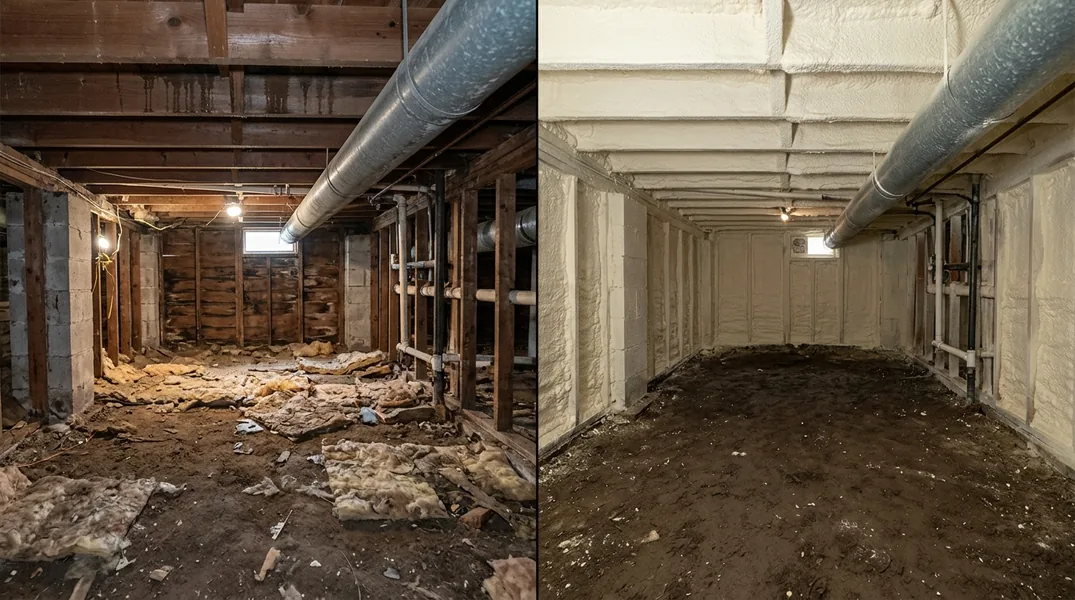
Many Jacksonville homes sit on pier and beam foundations or have crawl spaces that are equally vulnerable to humidity damage. These below-grade spaces experience even more moisture exposure than attics, making them critical areas for proper insulation. Jacksonville's water table and seasonal flooding patterns mean that crawl spaces can become saturated with moisture if not properly protected. The crawl space spray foam solution creates a moisture-resistant barrier that prevents ground moisture from rising into your home's structural system.
When selecting the best insulation for crawl space applications, closed cell spray foam is often the preferred choice because of its superior moisture resistance and structural strength. This type of foam not only insulates but also creates a vapor barrier that keeps ground moisture from entering your living spaces above. Many homeowners dealing with cold floors insulation issues find that spray foam applied to their pier and beam structure eliminates uncomfortable temperature variations and reduces energy costs. The investment in proper crawl space insulation pays dividends through improved comfort, lower utility bills, and protection against costly structural damage from moisture intrusion.
Energy Efficiency and Humidity Control Work Together
In Florida's climate, energy efficiency and humidity control are inseparable. When your attic or crawl space allows humid air to infiltrate, your air conditioning system must work harder to remove that moisture while cooling your home. This dual burden drives up energy consumption significantly. Spray foam insulation solves both problems simultaneously. By creating an air-tight seal, it prevents humid outside air from entering your conditioned spaces. This means your HVAC system can focus on cooling rather than constantly fighting moisture intrusion, resulting in substantial energy savings throughout the year.
Many Jacksonville homeowners are surprised to learn that upgrading to spray foam insulation can reduce their cooling costs by 15 to 30 percent, depending on the current condition of their attic or crawl space. The air-sealing properties are particularly valuable during humid months when moisture-laden air would otherwise infiltrate through gaps in traditional insulation. Beyond the immediate energy savings, proper insulation protects your home's structure, extends the life of your HVAC equipment, and improves indoor air quality by preventing moisture-related mold growth. These long-term benefits make spray foam a smart investment for any homeowner serious about comfort and durability in Florida's demanding climate.
Getting Professional Installation for Your Jacksonville Home
Spray foam insulation installation requires specialized equipment and training to ensure proper application and maximum performance. DIY approaches rarely achieve the comprehensive coverage and consistent density needed for optimal results. Professional installers understand how to assess your specific attic or crawl space conditions, account for Jacksonville's humidity patterns, and recommend the right foam type for your situation. They also ensure that ventilation is properly managed and that the installation complies with local building codes and safety standards.
If you're ready to upgrade your home's insulation and protect it from Jacksonville's humidity challenges, contact Jacksonville Spray Foam Insulation today at (904) 816-3633 to schedule your free estimate. Our team has extensive experience working with homes throughout the area, and we understand the specific moisture and climate challenges that Florida homeowners face. We'll assess your attic, crawl space, or other areas needing insulation and provide a detailed recommendation with transparent pricing so you can make an informed decision. Don't let humidity damage your home's structure and drive up your energy bills. Professional spray foam insulation is an investment that pays for itself through energy savings while protecting your home for decades to come.
Looking for a professional spray foam insulation contractor in Jacksonville? Jacksonville Spray Foam Insulation responds fast for all your spray foam insulation needs.
Get a Free Quote